Self-published · 2023 · 7 min read
University of Arizona’s “Free tuition” grant did more harm than good.
By Trinity Norris
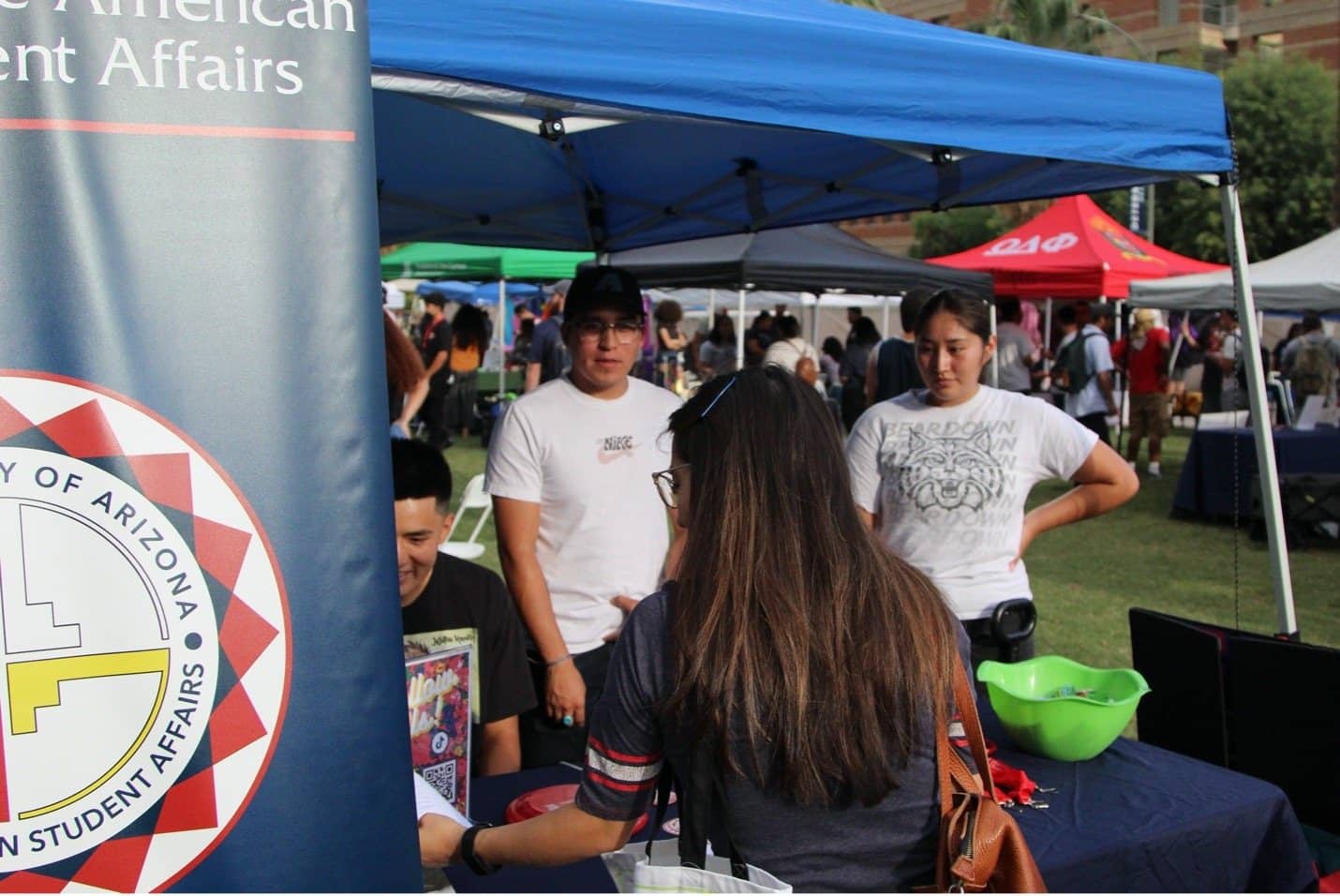
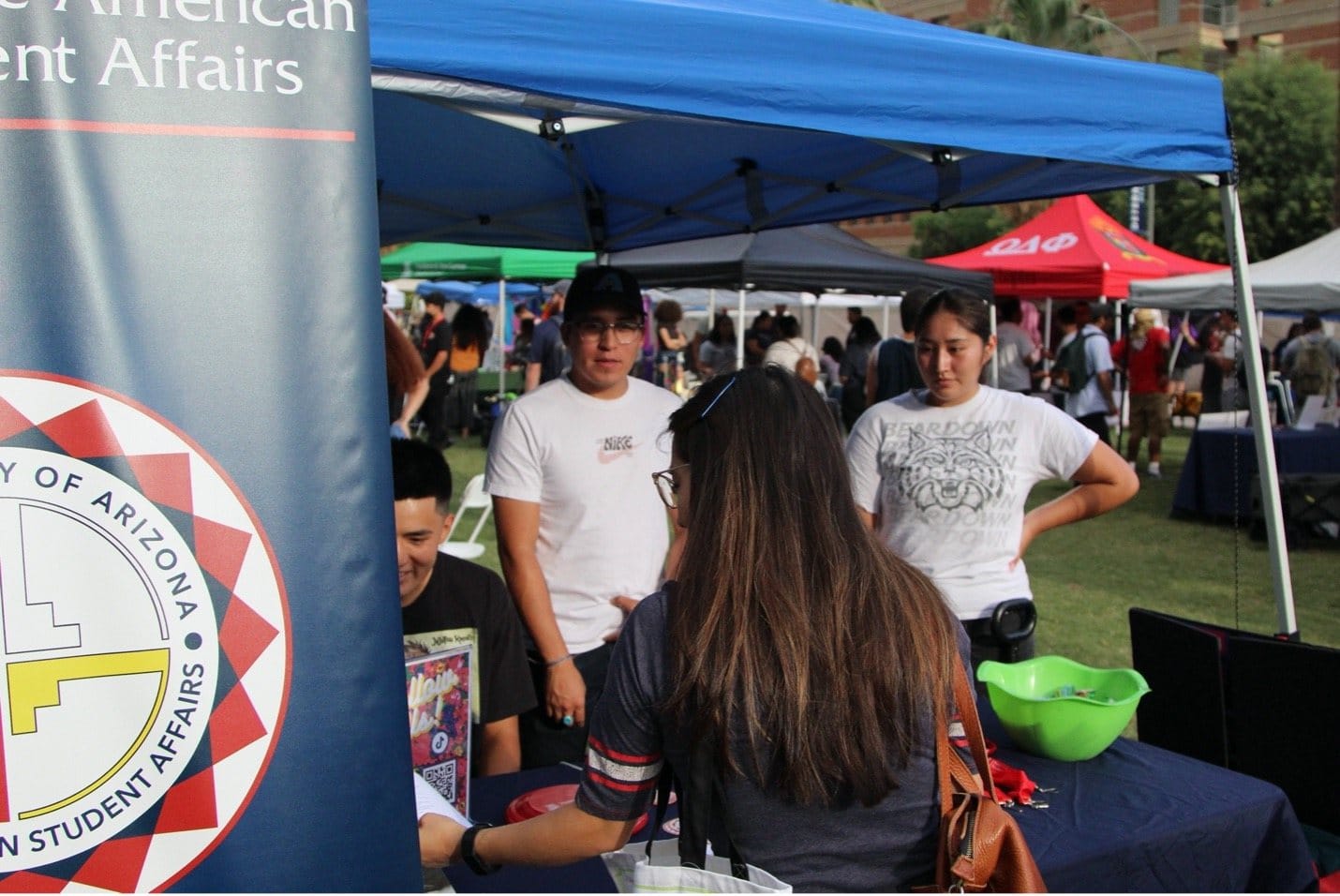
The University of Arizona trial run of the new Arizona Native Scholars grant has caused nothing but problems for the Native American student who received the grant.
The University of Arizona have adopted its new “free tuition” grant, being paid through internal reallocation of financial aid funding. This grant currently only applies to full time undergraduate students. The grant currently covers mandatory fees and tuition for students who are a part of the state’s 22 federally recognized tribes in Arizona.
The University of Arizona, also known as UArizona is a land-grant institution. The university currently occupies the land of the Tohono O’odham Nation and Pascua Yaqui. According to the Congressional Research Service in a report titled The U.S. Land-Grant University System: An Overview written by Genevieve K. Croft in 2019 talks about the land-grant history saying, A land-grant institution is where a university or college systems receive benefits from the Morrill Acts of 1862 and 1890. The acts promoted the establishments of institutions such as universities focused on agricultural and mechanical arts without other scientific and classical studies. The universities mission being a land-grant institution says,
“We are driven to do great things. It’s our passion to transform the lives of our student Wildcats and to solve some of the biggest challenges facing our state and the world,”
The University of Arizona serves Native American students with the mission of driving to do great things. As of Fall 2022, the University of Arizona currently has 1,782 total enrolled students who identify as Native American. Which is an overall 3.5% of all students attending the University of Arizona according to The University of Arizona’s Native American Advancement, Initiatives & Research student demographics dashboards.
The Arizona Native Scholars Grant (ANS) began its trial run of the grant during the Fall 2022 semester at the University of Arizona. Those who apply are to provide the information needed to the University of Arizona. This includes sending in a photo or copy of the student’s certificate of Indian blood or tribal ID. The student also must have completed the Free Application for Federal Student Aid and be a full-time undergraduate student seeking their first bachelor’s degree, this grant also can be awarded up to four years or eight consecutive semesters during their time at the University of Arizona.
According to the university’s financial aid site, ANS does not require students to demonstrate financial need eligible and students who do not meet the deadlines provided will not be automatically considered for the ANS grant in the future. As this grant is only for undergraduate students, Native American graduate students must still pay tuition.
However, according to some students this grant has cause nothing but trouble, Benjamin Davis, Tohono O’odham, a University of Arizona student who received the ANS grant says,
“I was actually looking into transferring to ASU because I’ve had some bad semesters at U of A. I was losing my financial aid and I had lost it for a couple of semesters, and ASU was actually going to offer my tuition to be completely covered, and what was not covered would be covered by my tribe,” Davis said.
As Davis was looking to transfer to Arizona State University, the University of Arizona announced the ANS grant publicly via local news outlets.
When ANS was announced to me it gave me more opportunity and hope. Where I was going to be able to stay at the University of Arizona, and all the money I’ve spent at the university wouldn’t be wasted,” Davis Said.
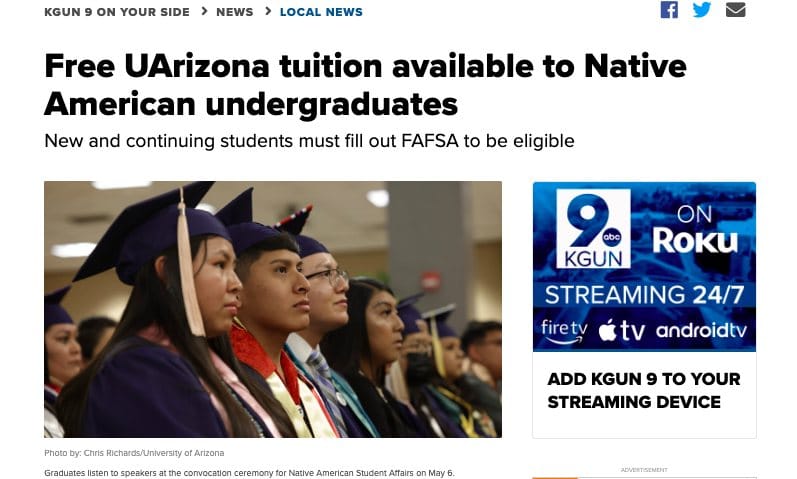
Davis was even unaware of the tribal verification process needed for the ANS grant. Davis mentions how in the initial announcement the tribal verification was referenced once, which can be hard to miss for many.
“The process to the ANS grant was also horrible, I originally didn’t know there was a tribal verification, so I ended up just doing it on the last day possible to apply for the ANS grant. I think that was unfair for them to hide the requirements to get the grant. I think there could have been a handful of students who would have really benefited from the grant and didn’t get it,” Davis said.
Davis ended up not receiving the ANS grant and now has an overdue balance to this day and is not able to pay the remaining balance off.
“Because of my financial situation, I didn’t get ANS and I still a large amount on my account, where I will have to take out a private loan, but ANS was marketed very wrong to a lot of students,” Davis said.
The free tuition that was promised by the university, turned out to be very hurtful to students and their financial aid. The ANS grant is supposed to allow students who receive tribal aid from their respective tribes. The grant is not supposed to interfere with any other tribal aid or scholarship the student may receive. The amount of the ANS grant can vary for each student. After all other aid has been applied to the students account the ANS grant is going to pay the difference left over from the tribal aid and scholarships, keeping in mind that, it only covers mandatory fees and a portion of the tuition that has not been paid yet.
Darrell Paddlety, White Mountain Apache , a junior at the University of Arizona, who is a transfer student from Northland Pioneer Community College and receives scholarships and has been offered the ANS grant says,
“I was misled, and I tried really hard to get a ton of scholarships before they even announced the ANS grant. It feels like I am being penalized for trying hard and doing well because they were not thinking of giving me anything,” Paddlety said.
Paddlety is now left with a pass due balance, because of over awards and not being consider full time for the ANS grant. Paddlety is not able to pay off the past due balance in his account.
The example given by the university as a student example is if a student is offered $745 Pell Grant and a $3,000 wildcat tuition award. The student’s ANS grant amount would be $8,955 if their base tuition and mandatory fees are $12,700.
Another university student named Ferminia Armstrong, Pascua Yaqui and White Mountain Apache, who currently serves as the financial aid peer advisor for Native American Student Affairs, and is also a recipient of the ANS grant says,
“I did receive the ANS grant, and I applied for it, and was accepted, but I am also a teacher candidate for the Indigenous Teacher Education Program (ITEP). I was informed that the ANS would interfere with the other funding we would get being in the ITEP program,” Armstrong said.
Noting that the ANS grant is not supposed to interfere with any of the funding students might receive from external and internal scholarships.
“I had to choose whether I wanted the ANS grant or didn’t, I decided to opt out of the ANS grant, because I was worried, I was going to have to owe money. This happened to a lot of their candidates within the ITEP program even though it was planned ahead to prevent issues like this from happening,” Armstrong said.
Armstrong, frustrated with the way the ANS grant and the way it interfered with her funding. Even though program coordinators planned for this after ANS was announced, the grant still managed to cause issues for Armstrong and her financial aid.
Robyn Nelson, Diné, a graduating senior says the grant impacted her mental health as a result to complications that occurred with the ANS grant,
“I am a native student who, at first, was really excited to hear that the University of Arizona announced the grant. I believe and understand that the grant was only paying for tuition costs,” Nelson said.
The grant description was not clear to many students who applied for the “free tuition” grant, as a result, the grant made students lose their scholarships from tribal aid.
“In that case, I wasn’t informed that the rest of my tuition scholarships I got from other sponsors and through the school were going to be taken away or reduced, even my Wildcat Recognition tuition award I got to go to school here, got reduced by the thousands,” Nelson said.
As a result, it has negatively impacted Nelsons mental health,
“It negatively impacted my mental health because I had to pay for the required school software’s for my degree, school projects, food, and other personal needs. Before, I wouldn’t have any thought of worrying about my financial situation until I applied for this grant for this academic school year,” Nelson said.
As a result of this trial run for the Arizona Native Scholars Grant, held at high regard by the University of Arizona. It has failed to successfully help students the way the grant was intended to. The flaws that arose from the grant have made a huge impact on the current Native American student population. The University will plan to offer the grant for the Spring 2023 semester, with an application deadline of January 18, 2023.
-30-