Remembering O’odham Foodways Through Community
Julian Juan
Written by Trinity Norris, Edited by Winona Little Owl-Ignacio, Graphic design by Aracely Rodriguez
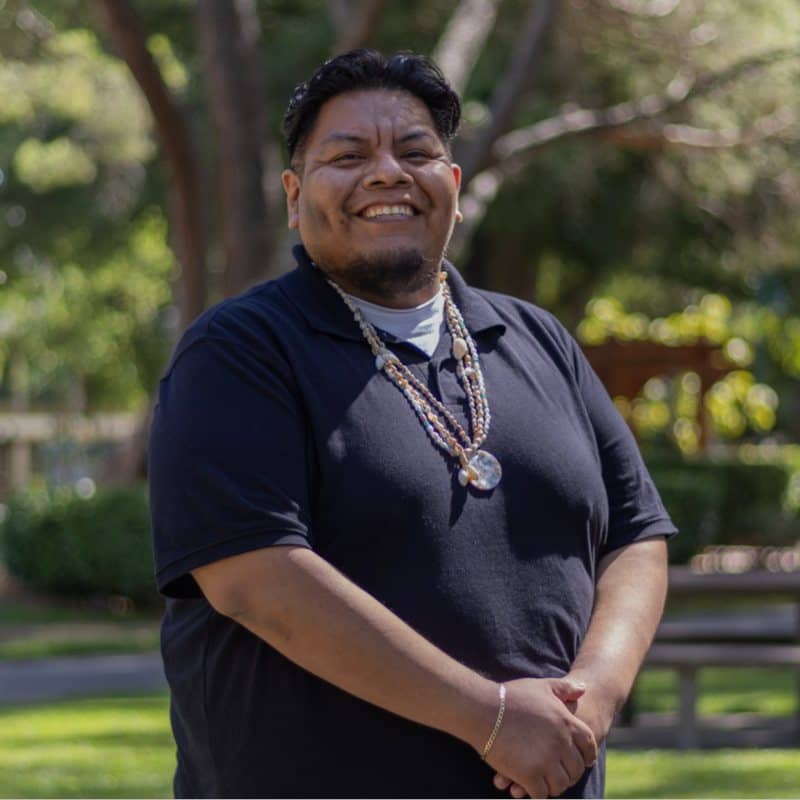
Julian Juan remembers the first time his grandmother opened a small piece of foil and pulled out something that looked like candy.
It was amber-colored, almost like the little root beer barrel candies he had seen before.
But this did not come from a store.
It came from a mesquite tree.
“She called it O’odham candy,” Julian said.
Growing up in Tucson, Julian’s earliest memories were shaped by the people and places immediately around him. At that age, he said, he did not give much thought to his identity or where his family came from.
Some of that began to shift during one of his first trips back to the Tohono O’odham Nation.
His mother told him they were going on a trip, and as a kid, the drive from Tucson felt like it took forever. They were headed to Santa Rosa, where his mother was playing softball.
While Julian was off playing with other kids, she called him over to meet some of the family gathered there.
“She was like, ‘This is your grandma. These are your cousins. This is your aunt,’” Julian recalled.
Until then, he had not thought much about the family connections he had outside of the people he grew up around. That trip became one of his earliest memories of beginning to see the larger family and community he was connected to.
Not long after, Julian and his mother moved back to the Nation. As he spent more time around family and living in different communities, those connections became a larger part of how he understood where he came from and his identity as O’odham.
Food was another part of how Julian came to understand those connections.
Growing up, when his family talked about traditional foods, Julian thought of the foods he saw and ate around him, including popovers, red chile, beans, potato salad, and squash and cheese.
“In my mind, that was our traditional foods,” he said.
As he got older, his understanding of traditional foods began to expand. He started learning more about foods grown and gathered from the land, the seasons they follow and the knowledge connected to them.
Looking back, though, Julian realized some of those relationships had already been present in his childhood.
He just did not think of them that way at the time.
One of them was something his grandmother, Bobby, called “O’odham candy.”
Julian remembers her carrying pieces of mesquite sap wrapped in foil. During the summer, she would gather the amber-colored pieces from mesquite trees and keep them with her.
“She always had it on her,” Julian said.
When she first offered him some, he expected something much sweeter. His grandmother was known to have the usual “grandma candies,” like butterscotch and the strawberry candies wrapped to look like strawberries.
Mesquite sap was different.
It was chewy, lightly sweet and carried the taste of mesquite.
“It’s not gonna taste like candy,” Julian said. “But I think when you think about traditionally our ancestors, they didn’t have diets that were overloaded, overly processed or had a lot of sugar. So to them, it might’ve been like, ‘Oh, this is sweet. It’s a sweet treat.’”
Once his grandmother showed him what to look for, Julian started noticing it himself.
Growing up, he and the other kids were often sent outside when they visited their grandparents.
“Go outside,” he remembers being told.
Part of him jokes that his grandparents probably did not want them running up the air conditioning bill. Whatever the reason, being outside gave him time to wander.
“Knowing it’s not too late.”
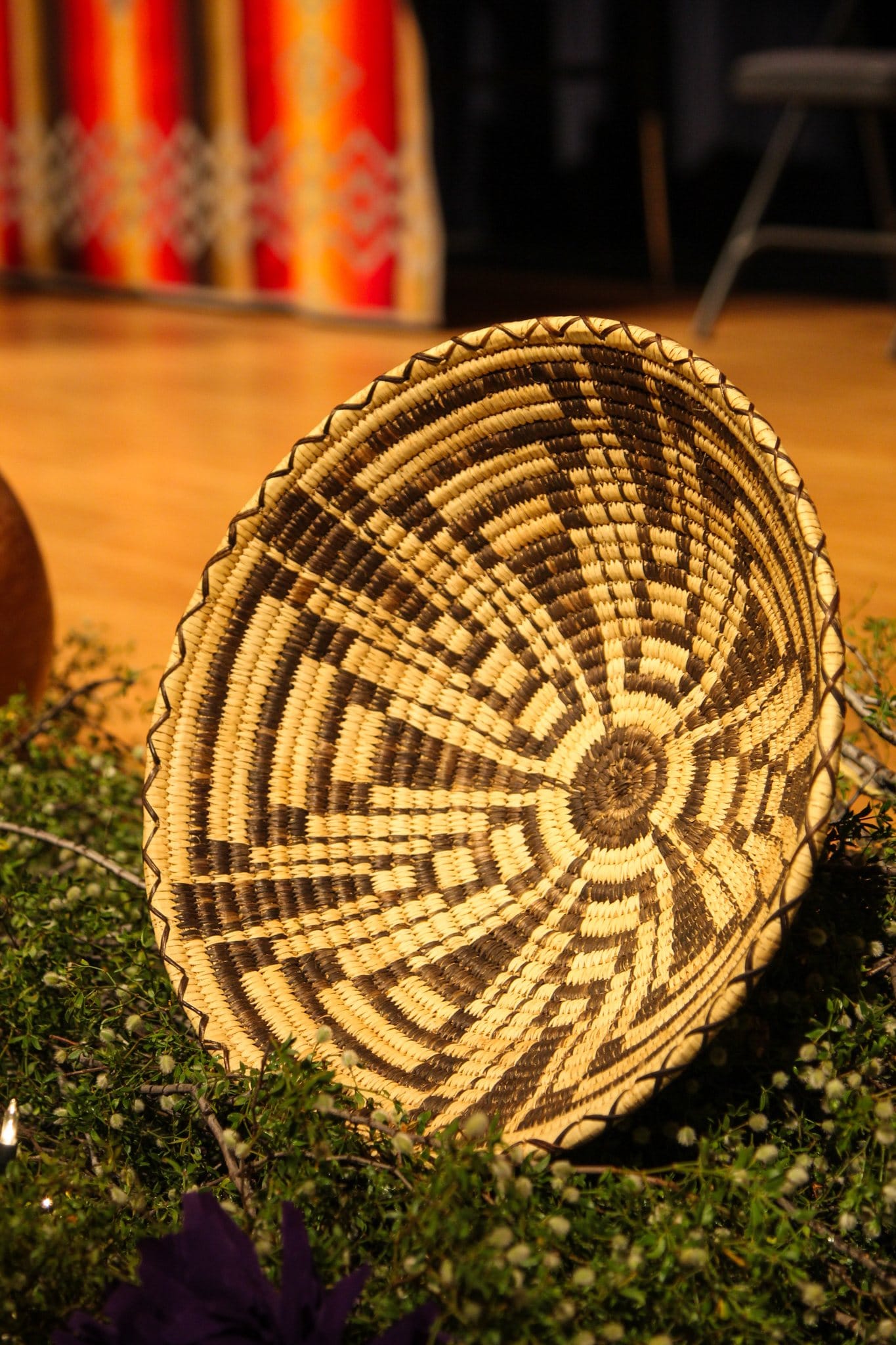
There were mesquite trees behind his grandmother’s house, and once Julian knew what the sap looked like, he began noticing its amber color against the trees.
“I don’t think I ever noticed it prior to being told what it was,” he said.
After that, he knew exactly where to look.
During the summer, he would find the hardened pieces, pull them from the tree and pop them into his mouth.
“I always used to look forward to summers when I was younger because I would just be out there picking them,” Julian said.
At the time, there was not much more to it.
His grandmother had shown him O’odham candy, and now he knew where to find it.
As an adult, Julian looks at that memory differently.
The more he has learned about O’odham foodways, the more he has thought about the amount of knowledge his grandparents and the generations before them carried. They knew the seasons, what could grow in the desert and how to live with the land.
It has also made him think about the questions he never thought to ask as a kid.
“Even just something as simple as going out and picking mesquite sap, like how much more could I have learned from that?” Julian said. “Or are there stories connected to that? Where did my grandma learn from, or who did she learn from?”
Those questions stay with him now.
As a child, mesquite sap was simply something his grandmother showed him. He was not thinking about where she learned to gather it or how that knowledge reached her.
He was a kid.
He saw candy, and he ate it.
But that small memory has become a reminder for Julian to listen while the people carrying those stories are still here.
“I wish I would have asked more questions or I should have sat down with them and listened to the stories and learned more about what they had to share,” he said.
That does not mean Julian believes the opportunity to learn has passed.
Today, he sees more organizations, schools and community spaces creating opportunities for O’odham people to learn about foods, planting and relationships with the land. It is something he wishes he had more access to when he was younger, but he also recognizes that learning can begin at any age.
“Knowing it’s not too late,” he said.
For Julian, traditional foods have also become a way to think about the knowledge O’odham people have carried through generations.
He thinks about tepary beans growing in a desert climate and the generations who understood when to plant, when to work and how to provide food in an environment outsiders might consider harsh.
“Our people really knew about the land,” Julian said.
That knowledge is part of why he believes traditional foods cannot be separated from the people and places they come from.
“Our foodways are an extension of us,” he said.
And with that comes responsibility.
Julian hopes future generations have the opportunity to learn about O’odham foods and continue the knowledge connected to them. He also hopes there is enough balance in the environment for those foods to continue growing for the people who come next.
“Our foodways, they carry our people,” Julian said. “They carry our knowledge.”
They carry the work that sustained communities before him. They carry stories and traditions. Sometimes, they also carry the memory of a grandmother opening a piece of foil and showing her grandson something growing on a tree he had walked past countless times before.
After that, Julian knew to look for the amber pieces catching the summer light.